Technology6 min read
Bidirectional charging: when the electric car gives electricity back
An electric car spends most of its time parked – with a large battery on board. Bidirectional charging turns it into an electricity store for the home and the grid. What is possible in Switzerland today, and where the obstacles still are.
Published on
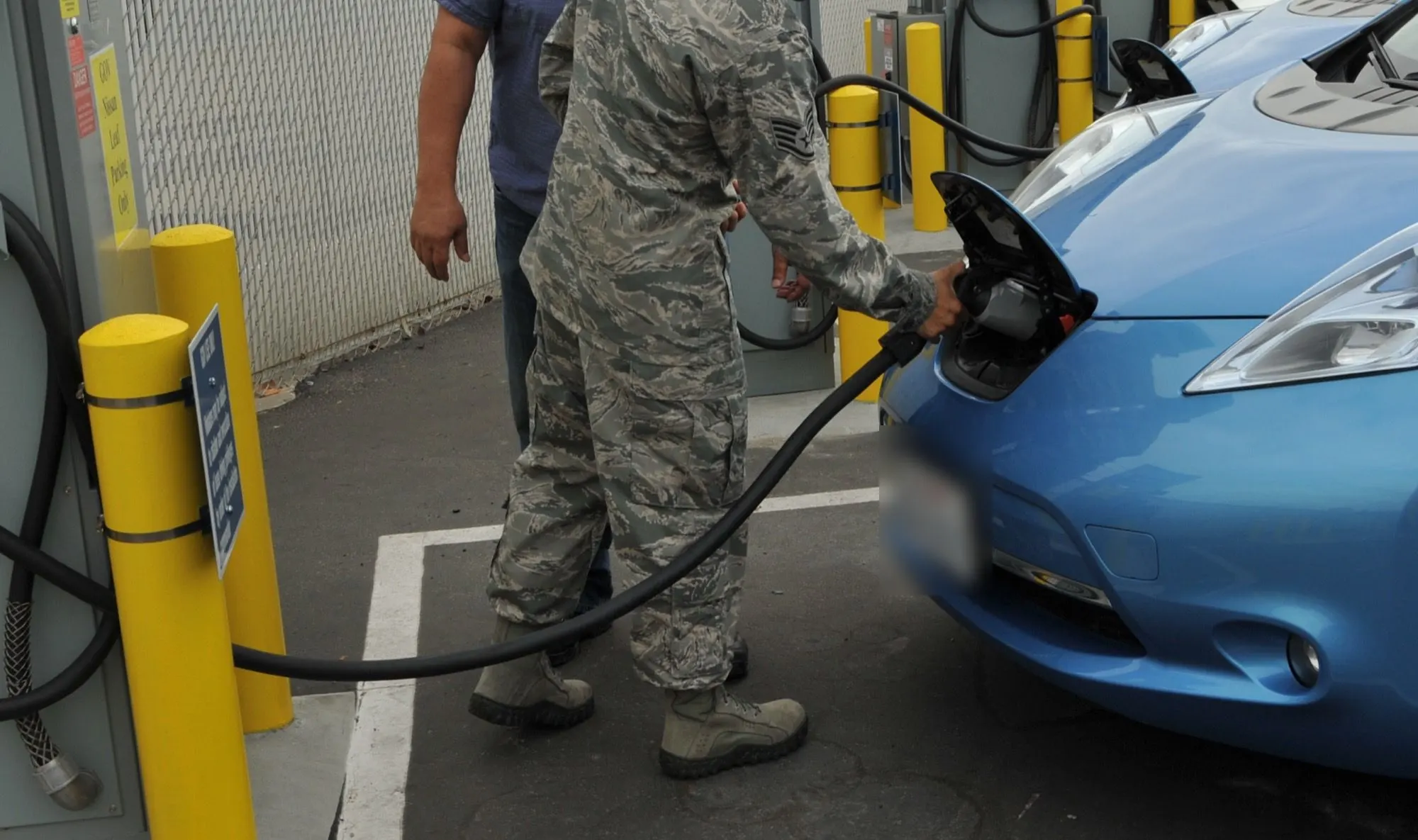
Bidirectional charging: V2L, V2H and V2G in brief
Bidirectional charging means that electricity flows in both directions: from the grid into the car and out of the vehicle battery again. The umbrella term is vehicle-to-everything, or V2X. Depending on where the electricity goes, the Swiss Federal Council's report of December 2024 distinguishes several applications:
This should not be confused with smart charging, which only controls the charging process intelligently, for instance by shifting it to times when the grid is lightly loaded. The car cannot give electricity back in that case.
- Vehicle-to-load (V2L): the car supplies a single appliance, such as a power tool or a coffee machine on a campsite
- Vehicle-to-home (V2H): the vehicle battery is integrated into the house as storage, for example for solar power from your own roof
- Vehicle-to-building (V2B): the same for larger buildings, sites and energy communities
- Vehicle-to-grid (V2G): the car feeds electricity back into the public grid
Why the potential is so large
Privately used cars are parked most of the time. The Federal Council does the sums: if around two million electric cars with an average of 60 kilowatt-hours are on the road in 2035, that adds up to 120 gigawatt-hours – roughly half the maximum usable energy content of all Swiss pumped-storage power plants. As few as 100,000 electric cars could in theory briefly feed a power output on the scale of the Leibstadt nuclear power plant into the grid.
For homeowners with photovoltaics the benefit is more tangible: solar power generated at midday goes into the vehicle battery and back into the house in the evening. That raises self-consumption and smooths load peaks. According to the report, it only makes sense if the car is connected to the house for much of the time – especially when the sun is shining.
Pilot projects in Switzerland: from Basel to V2X Suisse
In Basel, the Erlenmatt-Ost site showed as early as 2020 that just two bidirectional electric cars can raise the self-consumption of a development supplied with its own solar power and cut the evening load peaks. Further trials are or were under way in Yverdon and at Swiss Federal Railways, among others.
The largest Swiss trial to date was V2X Suisse: from autumn 2022 to spring 2024 the car-sharing provider Mobility operated fifty bidirectional Honda e cars at locations across Switzerland. More than 6,600 people drove them around 800,000 kilometres. Technically the concept worked; according to the Federal Council, the pooled vehicles even managed to qualify to supply primary control power to Swissgrid. Mobility's conclusion was sober nonetheless: operation does not yet pay for a car-sharing company, and the technology is not being continued for the time being.
What the Electricity Act changes – and what you have to register
For a long time bidirectional charging was at an economic disadvantage: electricity that first went into the battery and later back into the grid was subject to the grid usage charge. The Electricity Act, which Swiss voters approved on 9 June 2024, puts electric cars on an equal footing with other storage systems. They count as storage with end consumption; according to the Federal Council, the grid usage charge is refunded on request if the electricity flows are documented with suitable metering.
In practice, a bidirectional charging station generally has to be registered with the responsible distribution grid operator and approved by it – in the city of Zurich that is ewz. Since January 2022 this has been possible through the technical connection request. V2G requires a metering concept agreed with the grid operator. With V2H alone, it must be ensured that no electricity flows back into the grid; otherwise an additional meter is needed. Planning and installation are a matter for a qualified electrician.
Which cars and charging stations can do it
This is the biggest hurdle. According to the Federal Council, bidirectional charging is a mature technology but has not yet caught on because standards are lacking. At the start of 2024 only four models from Asian manufacturers fully supported V2G; the bidirectional charging stations available at the time worked with direct current and cost roughly five to ten times as much as conventional ones.
Wallbox manufacturers now name further compatible models. A presentation for the Canton of Zurich's Energiepraxis seminars lists, among others, vehicles from Nissan, Mitsubishi, Honda and Volkswagen and, for alternating-current solutions, from Renault, Volvo, Polestar and Kia – in each case according to the manufacturers. The restrictions matter: a car often works with only a few charging stations, the function is not enabled in every country, and some manufacturers limit the number of cycles or the amount of energy that can be fed back. Before buying, find out whether your exact combination of car, charging station and software has been released for Switzerland.
Does bidirectional charging harm the battery?
The concern is widespread but, according to the Federal Council, largely unfounded: compared with rapid charging or driving, the charge and discharge currents in bidirectional charging are very low, and the battery is only used within a gentle range, for example between 30 and 70 per cent. Premature, significant ageing is not to be expected provided the processes are well controlled. Intelligent control also makes sure there is always enough electricity left for driving.
Whether or not your electric car can give electricity back, its brakes, tyres, suspension, air conditioning and 12-volt battery still need looking after. For that you can request an appointment at Semes Automobile AG in Zurich-Oerlikon, an independent garage for all makes. For the charging station itself, your electrician and your grid operator are the right contacts.
Frequently asked questions
Is bidirectional charging allowed in Switzerland?
Yes. Since January 2022 bidirectional charging stations can be registered with the distribution grid operator through the technical connection request. As a rule its approval is required and, if electricity is to flow into the grid, an agreed metering concept.
Can every electric car charge bidirectionally?
No. You need a car that supports the function and a matching bidirectional charging station. Many models so far offer only V2L or V2H, and availability differs from country to country. According to the Federal Council, plug-in hybrids generally do not support bidirectional charging.
Is bidirectional charging worthwhile yet?
Most likely for homeowners with photovoltaics whose car is often at home during the day. The charging stations are still considerably more expensive than ordinary ones, though. The Federal Council expects it to take some more years before bidirectional cars make up a significant share.
Sources
- V2X- («vehicle-to-grid») und Smart-Charging-Technologien. Batterien von Elektrofahrzeugen nutzen, um Energie zu speichern und Stromnetze auszugleichen – Bericht des Bundesrates in Erfüllung des Postulates 22.3569 – Der Bundesrat / Bundesamt für Energie BFE
- V2X: Bidirectional Charging for Future Mobility – Mobility Genossenschaft
- Bidirectional charging: Suitable electric cars and cheaper charging stations are needed – Mobility Genossenschaft
- Bidirektionales Laden – Grosse Potenziale, weitgehend ungenutzt – Kanton Zürich, Energiepraxis-Seminare (SPF Institut für Solartechnik, OST)
The facts in this article are based on these sources (accessed on 28 November 2026). For binding information, the body concerned is authoritative. General information without warranty; it does not replace individual advice.
More articles
Technology
Electric car servicing and maintenance: what stays, what goes
No oil change, no spark plugs, no exhaust: an electric car needs less servicing and maintenance than a combustion car – but not none. An overview of what remains on the list.
5 min read
Technology
Electric car range in winter: how much you lose and what helps
An electric car’s range drops noticeably in winter – in tests by around a quarter on average compared with the rated figure. The reasons are well understood, and pre-heating, seat heating and a moderate speed win back a good part of it.
5 min read
New models
New electric cars 2026: four important models at a glance
Which new electric cars define 2026? We present four models for which the manufacturers have published concrete data: two large SUVs with 800-volt technology and two compact electric cars for the city. All figures come from the brands' own press releases.
5 min read