Technology5 min read
Electric car brakes: regenerative braking, rust and proper care
An electric car mostly brakes with its motor and recovers electricity as it does so. This regenerative braking spares the brakes – and for that very reason creates a new problem: rust on discs that are hardly used.
Published on
Regenerative braking: how an electric car slows down
When it comes to braking, an electric car works with two systems. When you lift off the accelerator or press the brake lightly, the electric motor becomes a generator: it slows the car and feeds the electricity it produces back into the battery. This recovery of kinetic energy is called regenerative braking, or recuperation.
In addition, every electric car has perfectly ordinary hydraulic friction brakes with discs and pads, sometimes with drums on the rear axle. The electronics continuously decide which part of the deceleration is handled by the motor and which by the friction brakes. Engineers call this interplay brake blending. Ideally, the person at the wheel notices nothing.
How much energy regenerative braking recovers
The German motoring club ADAC evaluated measurements of 19 electric cars in the WLTP test cycle. On average, the cars recovered around 22 per cent of the energy drawn from the battery. In urban traffic with its constant braking and pulling away the figure was about 30 per cent, and above 40 per cent for individual models. On the motorway, where there is hardly any braking, the share fell to around 10 per cent.
The effect is especially clear in the mountains. On a pass road in the Bavarian foothills of the Alps, a heavy electric saloon recovered a good 26 kilowatt-hours per 100 kilometres on the way down in the ADAC trial, a light small car around 7. Heavy cars with powerful motors recover more – but they also need correspondingly more going uphill. For drives over Swiss passes this means that a good part of the energy used for the climb comes back on the descent.
When the friction brakes still do the work
Regenerative braking has limits. In an emergency stop the friction brakes must bite immediately and with full force; the motor alone cannot achieve that deceleration. The battery sets limits too: it has to be able to absorb the electricity. When it is fully charged, hardly any recuperation is possible at first, ADAC notes. Anyone setting off from the top of a pass with a full battery therefore brakes more mechanically at the start.
On many models the strength of regeneration can be adjusted, for instance with paddles on the steering wheel. Some offer one-pedal driving: the car slows to a standstill when you release the accelerator. In town, strong regeneration pays off. On the motorway it is more efficient, according to ADAC, to let the car coast without regeneration.
Rust instead of wear: the problem of the little-used brake
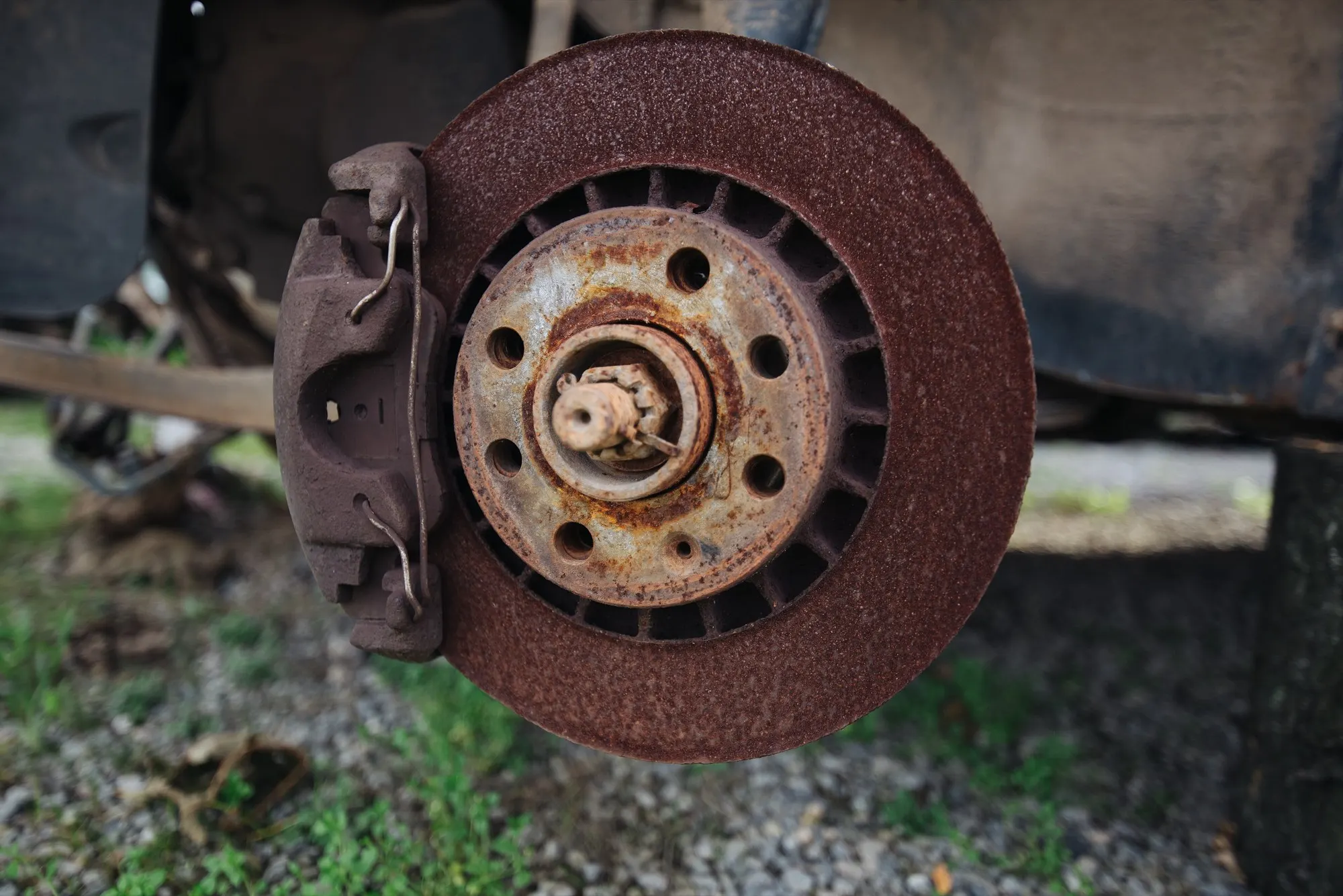
Because the motor takes on a large share of the work, pads and discs often last longer. The downside: brake discs that are rarely used develop rust. Moisture and road salt in winter make matters worse. The pads suffer as well: if they never get properly warm, they can glaze over and lose friction. Braking performance then declines.
The signs are vibration and squealing or grinding noises, which are particularly noticeable in a quiet electric car. In the TÜV Report 2027, which evaluates the periodic roadworthiness tests in Germany, brakes are among the most common problem areas of electric cars; on individual models brake disc defects are especially frequent. The differences between models are large, though – the design of the components plays an important part.
How to keep the brakes of your electric car in shape
The good news: prevention takes little effort. These points help to stop the brakes of an electric car from rusting:
The friction brakes of an electric car are still hydraulic. The brake fluid therefore ages as in any other car and is tested and replaced according to the manufacturer's schedule.
- Brake more firmly from time to time to clean the discs – only when traffic safely allows it
- Check whether your model has a brake-cleaning function or adjustable regeneration (owner's manual)
- Watch out for noises, vibration and a change in pedal travel
- Have the brakes inspected at every service and before the roadworthiness test, even with low mileage
- Have the discs and pads looked at after the winter
Less brake dust: Euro 7 and the drum brake
Regenerative braking has a further benefit: less mechanical braking means less particulate matter from brake wear. The Euro 7 standard limits these particles for the first time. According to ADAC, the limits on introduction are 3 milligrams per kilometre for purely electric cars and 7 milligrams for all other drivetrains; from 2035 the lower figure is to apply to all.
For the same reason the drum brake is making a comeback. On the rear axle of an electric car with strong regeneration it is sufficient, it wears little, and its dust stays inside the closed housing. ADAC cites the VW ID.3 as an example.
Having your brakes checked in Zurich-Oerlikon
If the brakes squeal, the pedal vibrates or a warning light comes on, the car should go to the workshop – whether electric or not. Semes Automobile AG at Schwamendingenstrasse 106 in Zurich-Oerlikon is an independent garage for all makes; brake work is part of its workshop services. You can request an appointment online or on 043 311 64 80.
Frequently asked questions
Do the brakes of an electric car last longer?
Often yes, because regenerative braking handles a large part of the deceleration and pads and discs wear less. In return there is a risk of rust when the friction brakes are hardly used. What counts is therefore not only pad thickness but also the condition of the discs.
Does one-pedal driving harm the brakes?
Not directly. But if you slow down almost entirely by regeneration, the friction brakes are hardly used any more – and that is exactly when the discs start to rust. So brake deliberately more firmly now and then, when traffic safely allows it.
Why does my electric car sometimes regenerate less?
Usually because of the battery. When it is fully charged it can hardly absorb any electricity at first, and the car brakes more with its friction brakes. As the state of charge falls, full regeneration becomes available again.
Sources
- E-Autos gewinnen bis zu 40 Prozent Energie zurück – ADAC
- Bremsen in Elektroautos stecken voller Technik – HELLA Tech World
- Feinstaub durch Bremsenabrieb: Sind die Euro-7-Grenzwerte machbar? – ADAC
- TÜV-Report 2027: Zu viele Autos fallen bei der HU durch – ADAC
The facts in this article are based on these sources (accessed on 28 November 2026). For binding information, the body concerned is authoritative. General information without warranty; it does not replace individual advice.
More articles
Technology
Electric car servicing and maintenance: what stays, what goes
No oil change, no spark plugs, no exhaust: an electric car needs less servicing and maintenance than a combustion car – but not none. An overview of what remains on the list.
5 min read
Technology
Electric car range in winter: how much you lose and what helps
An electric car’s range drops noticeably in winter – in tests by around a quarter on average compared with the rated figure. The reasons are well understood, and pre-heating, seat heating and a moderate speed win back a good part of it.
5 min read
New models
Euro 7 emissions standard: what applies from late November 2026
The Euro 7 emissions standard applies in the EU from 29 November 2026 to new vehicle types. For the first time, an emissions standard also covers brake wear and the durability of traction batteries. We explain what changes, what stays the same and what it means for drivers in Switzerland.
5 min read